Maker Spotlight 1
For our first Maker Spotlight, we're happy to introduce Evan Brand. You may have seen him around at a variety of maker events; he's hard to miss in his denim jacket with a light-up or spinning back patch.
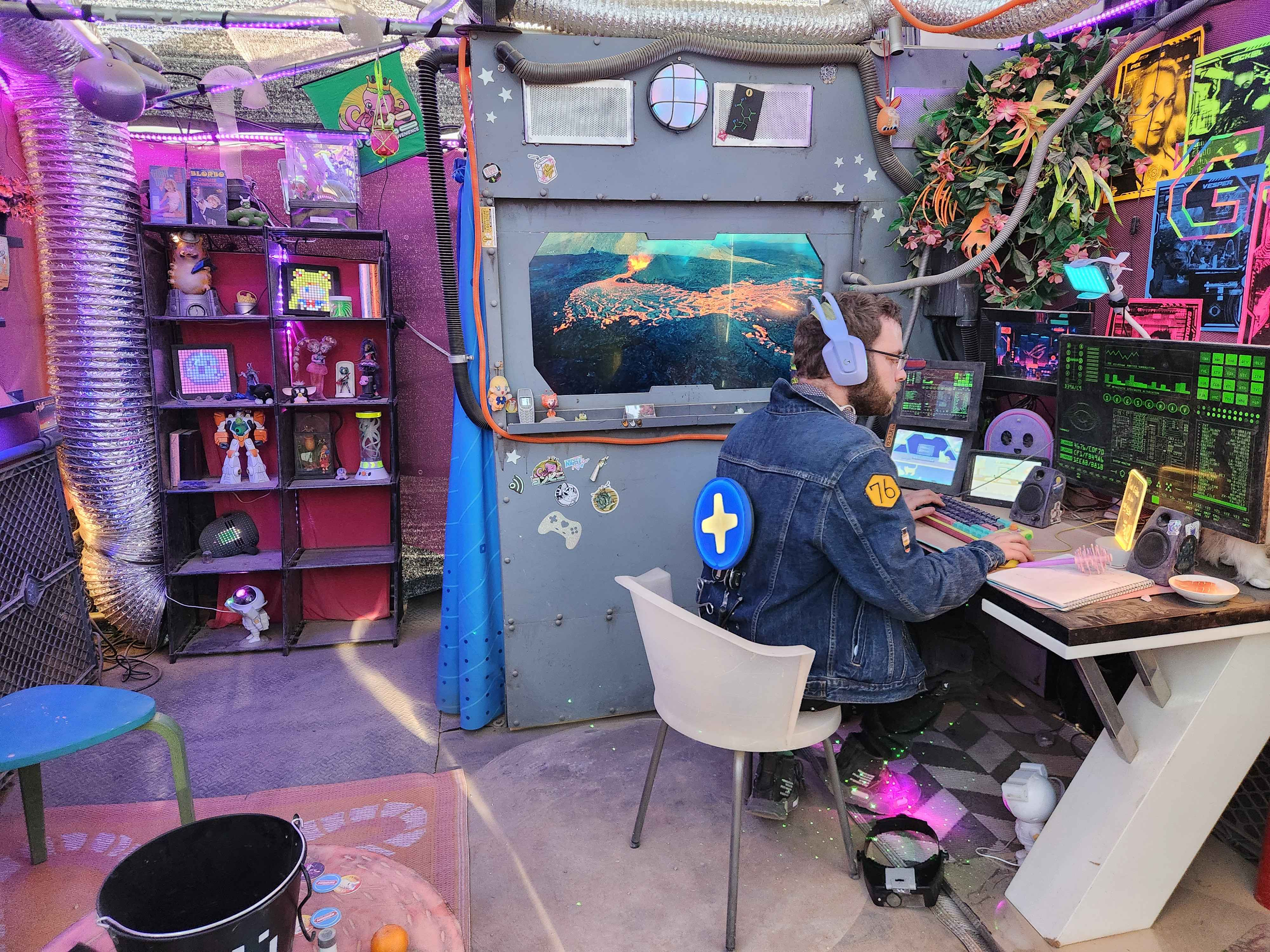
Could you tell me a little about yourself? Who are you, and what do you do?
My name's Evan. I'm the events coordinator for Hive 76, a community-run makerspace here in Philadelphia. I help out with the space for both on-site and off-site events, and events that we partner with to be able to do different activities and try to help build some good community relations with other spaces both here in Philadelphia and out in the wider world.
How did you get involved with Hive 76?
Actually it was a bit of happenstance. I ended up during the pandemic finding a video talking about makerspaces from the YouTube channel Strange Parts and that led me down the rabbit hole of looking into them in my loca area which led me to Hive 76.
So you've been involved there for about five or six years, right?
Yeah, and one of those situations where we had enough ideas about classes that I'd want to either teach or have someone else teach or events that we should go to, the previous events organizer for the space just kind of turned to me one day and was like "I've been planning to retire for a year or two now. Do you want to just do this?"
Had you had any related experience before you got started as the events coordinator here?
I've had a little bit of communication experience when it came to topics more from a business side. I'd had a degree in accounting and got my MBA during the pandemic. So I had a reasonable amount of ability to take a topic and pitch it, but not necessarily in the STEM fields. I only got into this about seven years ago, a little bit before the pandemic when I got into some 3D printing.
You mentioned you started with 3D printing, which ties in nicely with the next thing I wanted to ask you - what got you into making, and what types of projects have you done?
So I did kind of start with that 3D printing, which I'd started doing some D&D miniatures and terrain with, but the more I got into it the more I kind of was fascinated by the technology, which led to researching the community, which led to looking at all of these cool projects. At a certain point, if you're that kind of person who gets inspired to do things that kind of spark just lights up and for me it was just like "I wonder if I could do ______" and I've been running with it ever since.
That's really cool. What's your favorite tool that isn't a laser cutter, CNC router, 3D printer, or other type of digital fabrication tool?
By functionality, it's a hot glue gun. The number of times in which I've solved a problem just by having one on hand. For anyone watching this, the biggest hack that you'll ever need to know is that hot glue comes in every color under the sun. Get some black hot glue or color match it to your project if you don't want somethign showing. You'd be surprised about how many problems having a few different colored sticks of hot glue can solve.
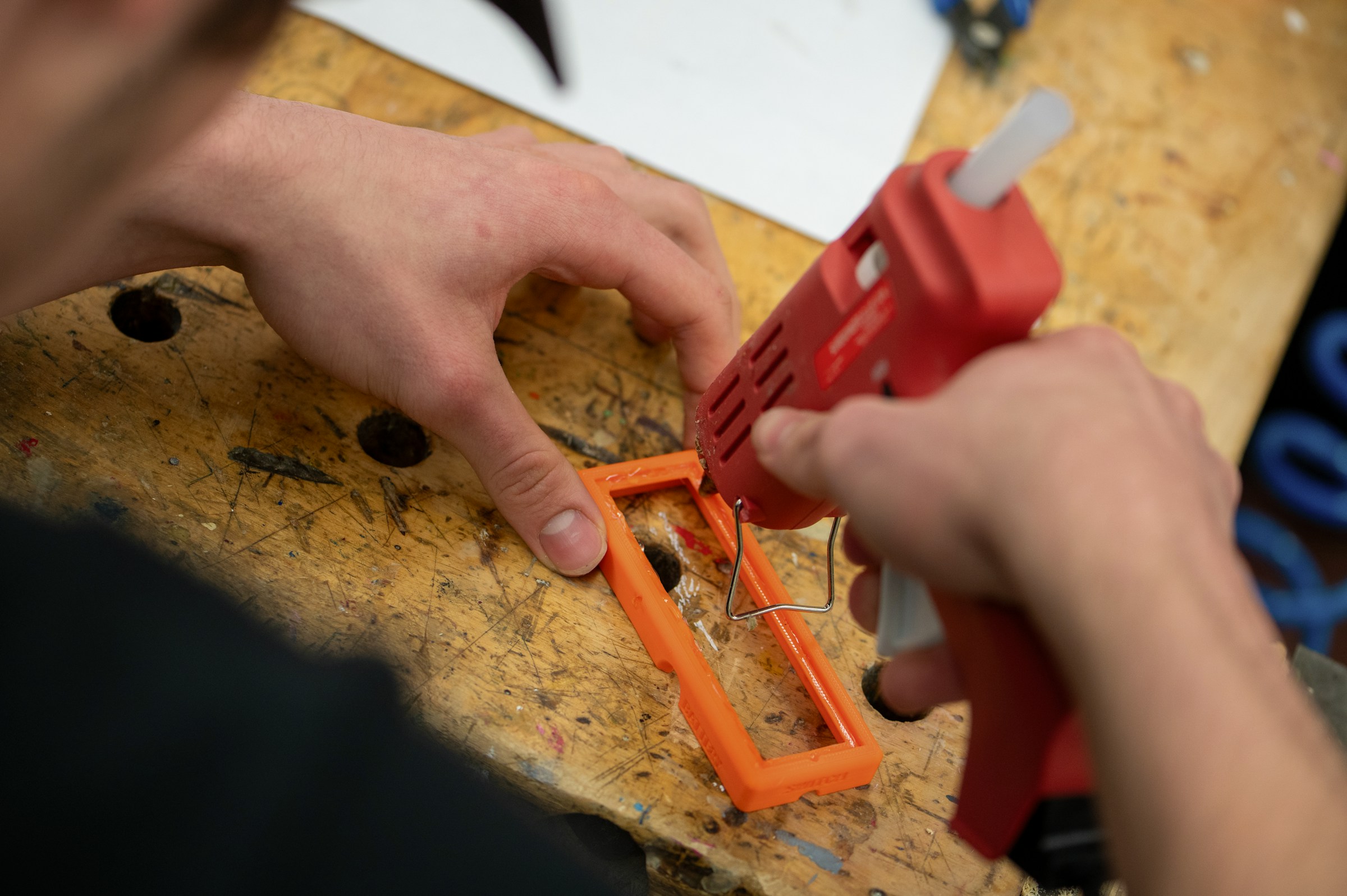
Nice. That's a good one, and I wasn't expecting it. We make heavy use of hot glue in combat robotics too, they're great for securing connectors and protecting electronics.
Yeah, the amount of times that I've kept something from short circuiting by just having someone hold the two wires apart while one of you shoot the hot glue in and hope... it's like "Hey, as long as this stays on one this cools, we're good."
Do you have anything that you think really should have had a bit more recognition than it got?
So for me, there are two projects in particular.
I like doing logistics and experiential stuff. So, the biggest one that I've gotten pointed at and someone says "You're the guy from this", was I run an ARG (augmented reality game) at PAX Unplugged and a few other events where I ahve a full walking fantasy shop, including shelves and a desk and a questboard on the back that I have some custom quests to send people around the event that I partnered up with exhibitors for. I custom laser etched some coins on the space's fiber laser and then would hand those out as rewards to then let people buy stuff from the shop. So that's probably the most photogenic one that I've seen people spot me with, especially because I've had a few people think I was actually a booth until I started moving. It's always a great reaction.
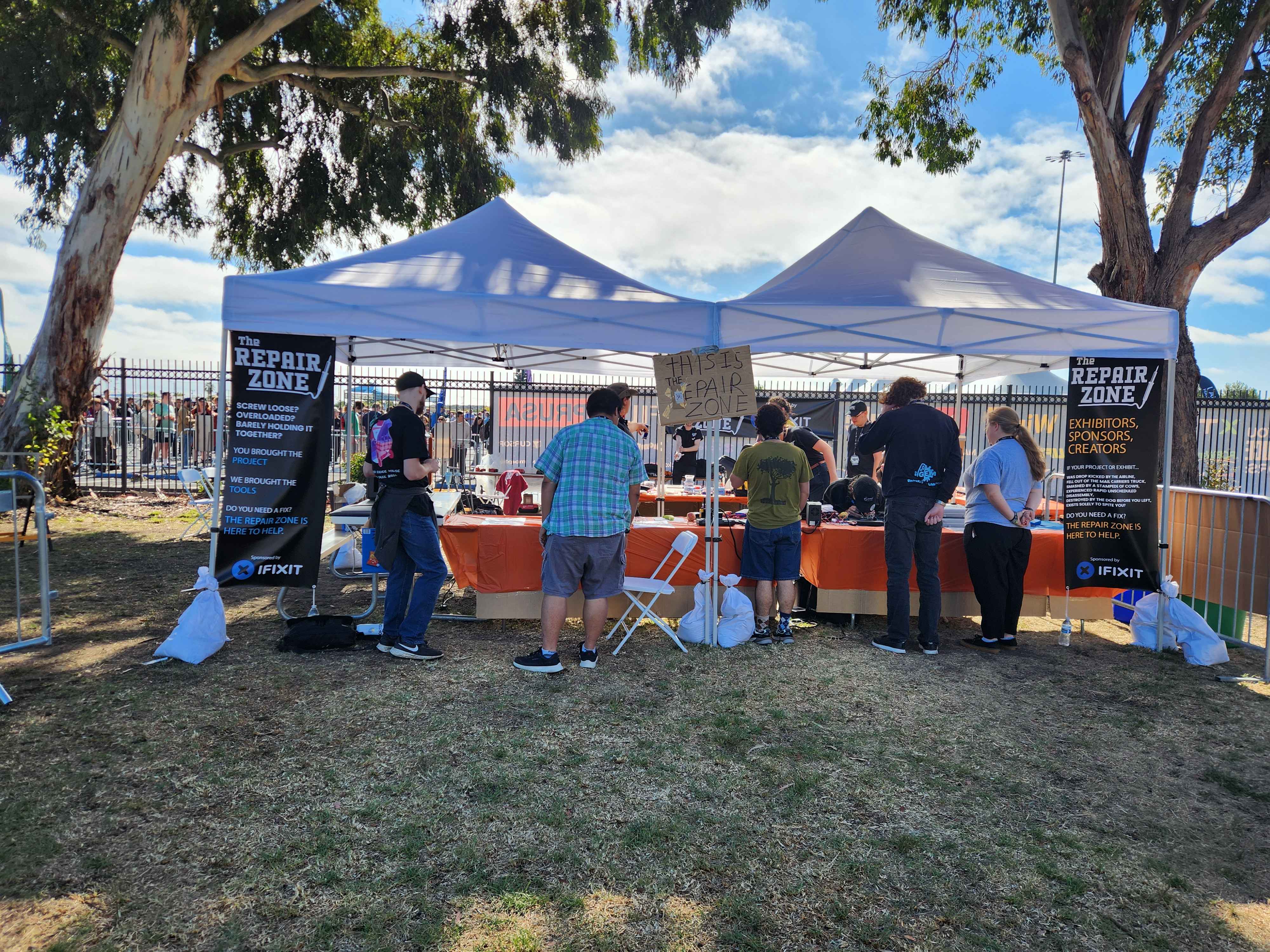
The second is actually a group community project that I started up this past year called The Repair Zone. I'd been running cosplay repair and other repair stuff at various events, but the last three years at the convention Open Sauce I'd run a mobile repair zone. The first year was just me and one person who asked to help. Second year there were a bunch of different exhibitors who did it without communicating with each other and I kind of organized this on the discord and created a ticketing system. Going into year three of doing this I'd reached out to the organization to actually have us do this as a partnership with the event so that it would be a bit more official and we'd have a bit more communication back and forth. So we had our own 12 person team going the entire time. 750 repairs I believe over the course of three days.
Outside of projects, a cool thing that I've made - I love playing those augmented reality game situations where I can bring these resources in and help other people who make cool projects. I'm pretty good at that pre-planning admin stuff and very proud about how the team and I were able to get things together this year. It's a great time.
Having benefited from your repair zone at Open Sauce, I very much appreciate that project. And the booth is very cool.
The best time to get a chance to talk to someone amazing is while they're word vomiting while you're helping them fix up a project. It's the thing they care about most in the world and you're there with the one resistor they needed to keep it up and running. I have some good stories with it.
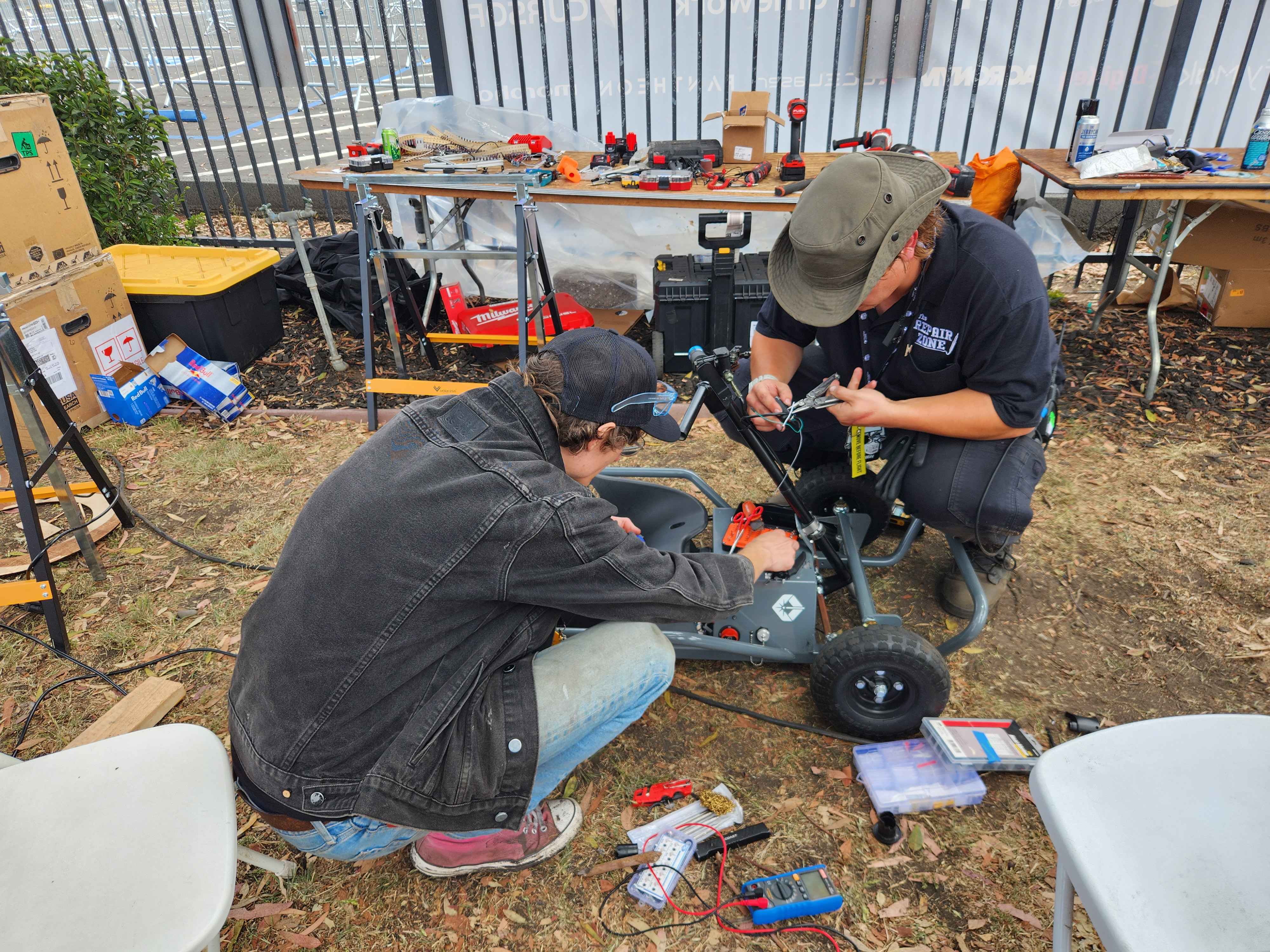
Do you have one repair that you'd love to share right now?
There's a wide variety of repairs that have been fun for me. We were able to fix two people's wheelchairs at the event. We actually did data recovery for some creators who otherwise would have lost their footage from the event. The Animatronic Awesome was one that I did find quite entertaining that we ended up facing up. But other than that just fun stuff like we had our friend Sasha live 3D modeling and printing stuff out on some Prusa Core Ones. So during the event we were actually able to look at a problem, live model a fix for it, and have it to them within an hour, which is incredible. I think next year we do need some laser cutters, but that's already in the books.
Yeah, laser cutters are great for that if you don't need full 3D or if you can slot things together. I love how fast they can be.
It's amazing.
What are some things you've used a laser cutter for? I know you've mentioned the coins already.
The coins, I've done a lot of fun signage stuff, pulled in some woodworking techniques. You can actually do a resin inlay if you laser deep enough into a thing. Makes it easier to do cool signs. I've done some maps for some tabletop games and it's just a useful tool, especially once you get used to it. I've used it for the coins and being able to just throw an image in the osftware and just hit go is really useful. Especially since my favorite thing for using a laser cutter in 3D printers is to turn something around in an an unrealistic amount of time. A joke is funny, and actualizing a joke in less than a day and getting something to someone an hour after a conversation happens - that look of amazement and a little bit of fear in someone's eyes of "How did you do that?". It's great.
It really is. I've had those moments where somebody says "It'd be really cool to have this" and then you hand it to them and they're just shocked.
My business cards for Hive have the full poster for Hive76 on one side and my info on the other side. I have people ask me all the time "I could just take a photo, do you need this back?" and I say no, that's just the card. And then I get the baffled look of "This is a metal business card?!". I make them myself at home. They're cheaper than printed cards.
I love that speed. 3D printing does some really cool stuff, but sometimes having something right away makes such a difference.
Have you played around with CNC routers at all?
Yes. I need to do more.
We have a large one at Hive76 and it is lovely and it scares me. It's one of those things where it uses VCarve and a few other softwares that need to be kind of jumbled otgether to run the thing, and has a multi-step process to get it up and going just because it is a really good machine, but it's on the more industrial side than the prosumer side. So it's the kind of thing that I have a respectful appreciation for. I've seen it do amazing things, and I've worked with people to do amazing things on them, but it's the kind of thing where it's not like the 3D printer where you walk away and it's fine. It's the kind of thing where you sit in the corner, and you make sure that it's well enclosed and no one is walking around it when you have a router plunging through wood or aluminum.
Yeah, they're cool, though, and they let you work with other materials, like metal. Something you might be interested in - we actually have new software that came out recently for CNC routers. So since you already use LightBurn, MillMage uses that same interface. And one of my favorite things is that if your router has a compatible controller, you can actually directly control it from inside of MillMage instead of going from program to program. So you can iterate fast.
That genuinely would be amazing. And this is something I've been trying to update our machiens for because having everything in an ecosystem is lovely, especially the fact that LightBurn is machine agnostic so it's not like I have to get one laser and then if I switch brands everything is ruined. So being able to have one thing you train people on that follows the same design language instead of each tool having its own traing would make things infinitely easier to get people up and going with services.
Yeah, that was part of what we were aiming for. And being able to iterate without having to go through the export and import step over and over makes things so much easier.
What are some of your favorite skills or techniques that you've picked up along the way?
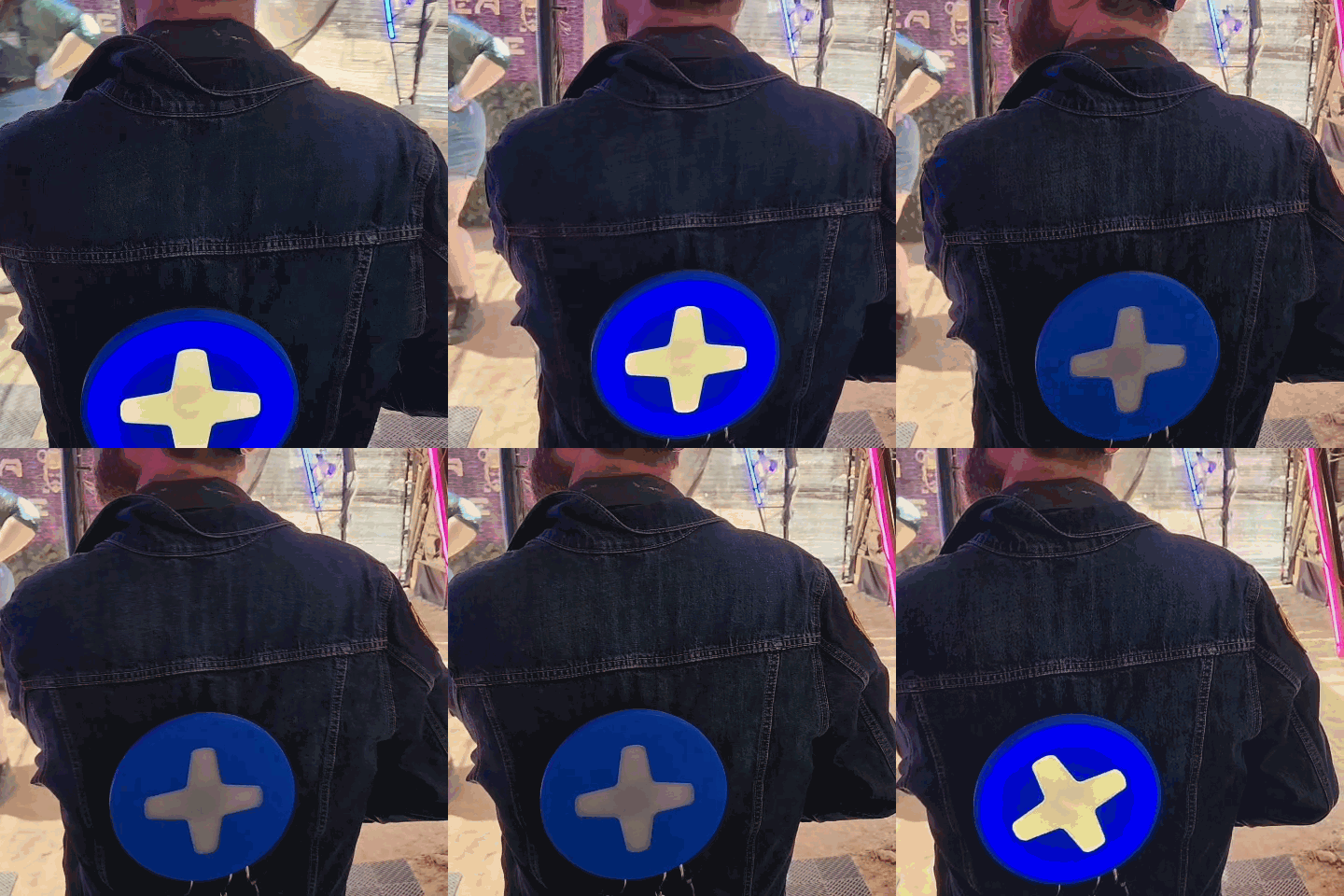
I would say a few of the fun ones I'd mentioned before, like that wood inlay stuff where it's either different pieces of wood or doing a resin pour to not have to carefully pour on top of and sand away a laser project. I'm also personally a huge fan of adding LEDs to things. Anything can be fun, but if you make it light up or move, the most basic thing becomes infinitely more interesting to folks. So using stuff like WLED, or even just embedding some LEDs with coin cells and on/off switches and different stuff. I've been able to do fun things like spinning back jacket patches for a denim jacket or actual exclamation points and question marks that light up like a video game that I've used for a lop party that I was helping some friends run. The new patch on the back now actually spins.
Yeah, I remember your jacket. It spins now?
Yeah, and I made the back of the jacket modular. So I can swap out the patch, which means that this project jacket can do the one thing that everyone who's ever made a wearable wishes they could do, which is throw it in the washing machine. So that was the goal - if I'm bringing this to enough things, I want to actually enjoy wearing it to all the things and then spat it out if I have new ideas instead of having to have 10 different jackets and get patches for all of them because you have 10 different ideas.
I will say this, and this goes to anyone who's working on projects too. Look up to see if there's a standard for a lot of things. Even if you didn't think there, someone may have made a standard that's already existent. If not, make one yourself. Doesn't matter what it is, even if it's arbitrary. It's just making sure you can have something that you can consistently go back to and design around. It will make your life so much easier to just be able to import this design file on top of your project and it already has the mounting holes attached or whatever way you'd want to go about things.
At Hive76, how do you get people started using the laser or other equipment tha trequires training? What sort of pitfalls have you found? And do you have any advice for other makerspaces?
This goes in a few directions. Weirdly, the lasers are one of the easiest things to train people on. They deserve and require respect, more so than the 3D printers do. So it's largely making sure people are aware that you can't just walk away from them while they're in u se, but they're fully enclosed machines and we have the software preloaded on the computer next to them. So instead of having to be a whole class, it's usually a 15-20 minute one-on-one convo with someone who's already been trained and then running some demo project to make sure it sticks in their mind, and people can always ask if they have questions. They're relatively simple for starting out.
It gets tricker with things in the woodshop, whether it be saws or especially the CNC machine when it has that multi-step process and actual risk to the individual. Making sure that it's someone who's trained up properly, not just so that we can sign a check mark, but making sure they know what they're doing safely. That takes expertise and it takes a dedicated class which does slow down training of individuals occasionally. Especially for the CNC, we have one person who is a trained operator and uses them for their day job and he's the one that teaches our classes. So it is a pain point in if this person is busy or had already taught a class recently. They usually do it bi-monthly, so if a person misses that it becomes a whole ordeal of whether you take a day out of our trainer's life to teach this one person, or do they have to wait a month or two until the next class comes up?
So my advice would be that if there are tools that are within a reasonable spec to have trusted individuals go through a more intensive training so you can have several individuals who have enough expertise to teach others how to use it. Because there are certain tools that can be used but require a higher level of competency to actually train someone. and as lovely and hard working as any individual is, burnout exists, and it needs to be respected for long-term health of the space.
And second, if anything relies on one individual, it's fragile even if they're a superstar. So having other people who understand how to do the things means that if that person leaves, whether by their own choice or because of life circumstances, then that tool is still usable by the community instead of it just becoming a dead weight.
That's great advice. I've often heard that referred to as the bus factor - how many people can get hit by a bus before your organization has a crisis.
Yeah, pretty much. I also think setting up expectations for community spaces is key. If you're a place which is charging hundreds of dollars for membership and is poised to be an incubator for small businesses, then there's a higher standard of tool uptime and training availability than if you're charging $50-100 in a community space that's more targeted towards the amateur hobbyist and is known to be a space run by the community. So having those expectations set and understood before people join makes it a lot easier to talk to folkds and explain why something may be delayed or certain classes might not happen every other week to get people started with the equipment.
That's a really good point about the expectations. What are your favorite things to show people how to do or get them started with?
It's fun doing a quick demo project and occasionally showing 3D printers off. More than them being the best at anything, the speed with which you can show a thing starting up and then start asking questions that help get the gears turning like "What kinnd of projects are you thinking of?". The best way to get people involved with making things is chatting about ideas and showing them immediately solutions for how they could do the thing. Because a lot of times, the thing they thought is impossible is not the most difficult thing in the world. This is the biggest benefit of a makerspace - the community who can point out a think and say something like "I tried that three years ago. Go to this website, you'll find the information you need."
I love that about makerspaces, and for me it's always been more about the community than the actual tools. You can potentially access the tools elsewhere or buy your own, but without the community to help the tools are a lot less use. My makerspace back in New Jersey has had times where they didn't even have a physical space but kept going because they had community.
It's a third space and it's that brain trust of people who've walked in your shoes, and even if they haven't done exactly what you want to do, they can probably point you in a direction that saves you a few hours because they've made similar mistakes to what you're about to do. Not saying mistakes are bad, they're great for learning. We're all going to make mistakes and it lets you become the person you need to be. But occasionally if you can cut down on the unecessary learning lessons it makes it a lot better.
Definitely. And speaking of mistakes, this is actually a question I was thinking about earlier today. What's your favorite project that went horribly wrong? Or at least something that went wrong but ultimately was fun or a good learning experience.
The more funny one was that walking shop costume that I talked about earlier and a few situations in which I went to pick something up while wearing it. As I stood back up my knees gave me just the whisper of "You get the one time to stand back up" and realizing I need to redesign the weight distribution on this thing, otherwise I'm going to hurt myself.
The less fun one that taught me more was years and year back, actually pre-pandemic. I 3D printed a project on a CR10 mini and was clearing off the bed. I was being stupid and doing it with a razor, and my hand slipped and I had to get a few stitches. I'll describe the issue as Tarantinoing a part of my room, but I nicked a nerve a little. Eventually the feeling came back, but it ws a bit of a process of healing. Luckily I didn't need physical therapy or anything, but that kind of stupid decision of I was much younger and was impatient in a way that most makers are when you're getting started. And that's what I'd consider the capital lesson that a lot of makers run into when strating out. You have a close call or something goes wrong because of a rushing decision that makes you stop and forever think "Wait a minute, slow down. How should I handle this properly?". And from now on I always use plastic razors to clear things, and I take my time to think through problems a bit more than I did previously. So it's never a full solution, but I feel like most makers reach that lesson at some point. And hopefully it's not a permanent issue that you get from it, but a moment you take away that you can think back on that reminds you to consider things a little more carefully.
Those are both really great answers, thank you.
What advice do you have for other makers?
For fabrication, or for just being part of the community?
Both, actually.
In fabrication - learn from every discipline. The amount of skills that I've gained in prototyping from talking to cosplayers and the amount of stuff I've adapted from woodworkers to use in 3D printed. there's a lot of skills and mental practices that are considered comon in one that are just anathema to others. And being able to put all these pieces together means that you're not the expert of any one thing, but you're better than that. You're an amateur in many things and can often find solutions that would otherwise require being at the top of a class to even consider, just by grafting a different community's problem solving onto it.
And as for the community aspect of things, I would say chat with your local makers, talk about projects, and know that most folks at a makerspace are there because they care about community and are interested in others and what they're doing. So it's not a burden to talk about your project or idea, and often that's what people are coming in for. And the more you talk about the stuff that you're doing, the more people can talk about their own experiences that will relate and often can give you ideas for future projects or ways to go about something that you're working on you otherwise wouldn't. Also, you make friends that way.
And the secret about makers is that they go everywhere. So it doesn't matter once you join a community like this. It's niche, but also distributed enough that you'll run into people wherever you go. I quite literally ran into people in both Seoul and Tokyo from the maker comunities that I'd known because I was there for different maker events and happened to run into people I knew from California in both locations. Which, again, how many communities can you go to a random even tand see someone that you met six months ago in a state you're not even living in?
I had similar experiences. I even moved to another continent and when I got here, I joined my local makerspace and it turns out that one of the guys here, we have mutual friends through a project he worked on.
This is both a useful tip and a warning for anyone who does join the community. Everyone knows each other and that both means that it's excellent that if you're trying to get in contact with someone or work on a cool project, there's a non-zero chance you known someone who may be connected to them. But also, a warning to treat everyone with respect both because you never know who someone is or becomes. And oftentimes it's that one hobbyist with a weird idea that either starts a company or has been in the community 30 years and knows everyone. And you never want to be that guy that was being an ass to someone and it turns out, there goes your entire community.
So you've already touched on this a bit, but what communities do you usually hang out in?
These days, it's largely the maker community for running makerspaces and various other community organization meetups. A lot of community organizing here in Philly both for the makerspace and helping a few other community orgs with logistics because at a certain point once you do one you kind of have the baseline for doing a bunch of them. I've done a bit of stuff like live action roleplay and gaming things with friends, which has led into the costuming and props works that I've made, lots of tabletop RPG things. Dungeons of Dragons, Call of Cthulhu, that kind of stuff.
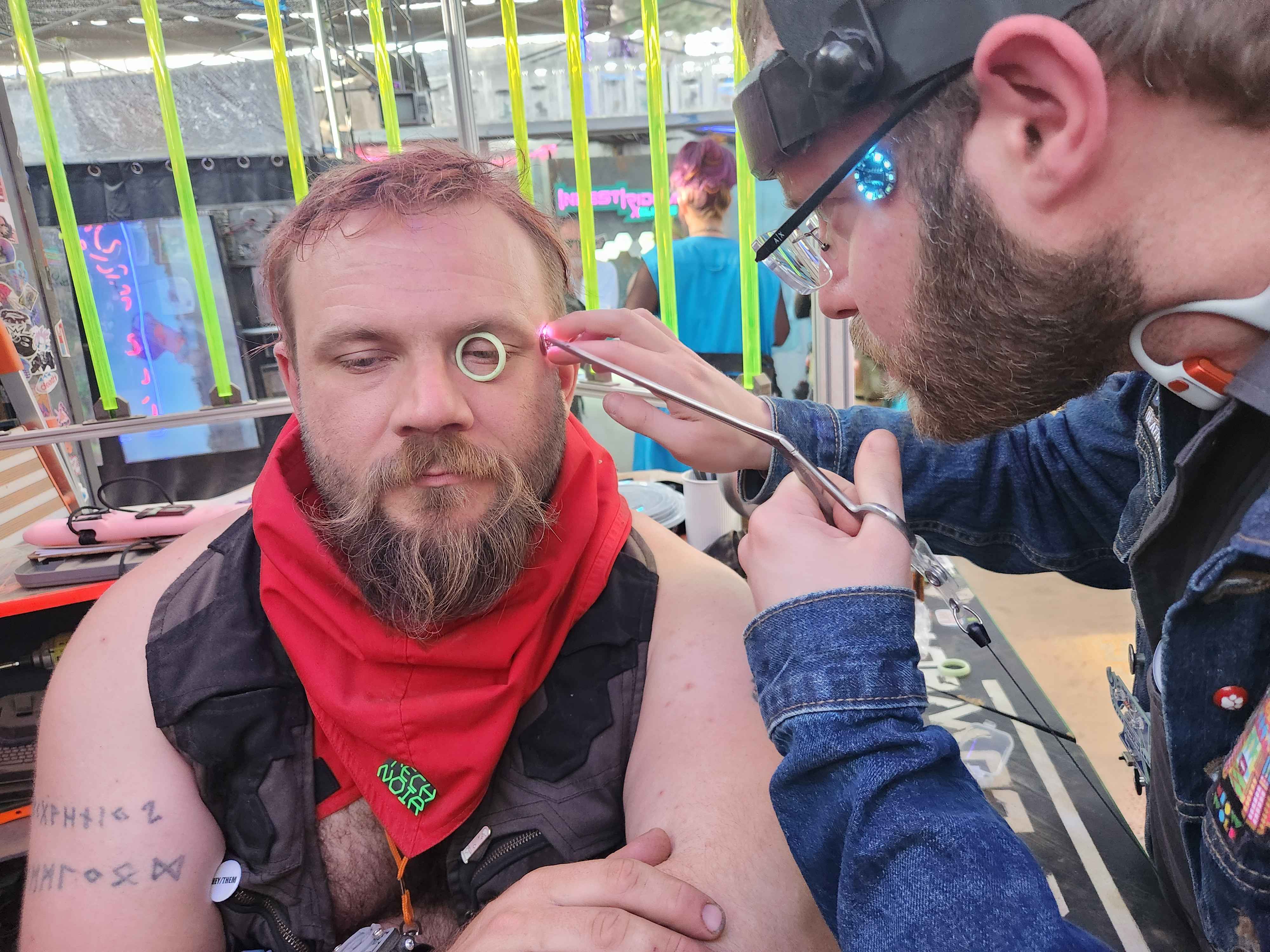
And travel. Before I got into making as a community thing, travelling used to be my big hobby. I'd find a country, plan a week in which I'd hit up everything within a 40 mile radius of where I'd be landing, and head back. That kind of thing. So I do love doing that and it's been nice since combining the traveling with maker community stuff in places I've been needing to check out anyway.
That's wonderful. What's coming up next for you? Do you have any plans for projects or things that you're going to be working on in the next few months?
Yeah, a couple of them. I'm currently putting together an exhibitor table for 3DPrintopia, previously East Coast Rep Rap festival. It's the east coast's community 3D printing convention. So Hive76 is going to be tabling now that it's come to Philadelphia hopefully permanently, and so just getting the logistics for that set up. I learned when I joined Hive that some of the members were part of the reprap movement from the beginning and helped out with some of the heat bed stuff. So our logo was actually on some old heat beds and boards that were used for printers back in the Mendel days. So there's getting stuff together for that, and getting ready for the PAX Unplugged ARG because we're starting to reach the point in which people are planning for that event.
The biggest lesson of doing any logistics that I've learned is to think about the time frame that you need for something. Triple it, and you're about how long before the event you should actually try to reach out to folks before the stressful part of planning starts and then know that I'll probably get a response at least a week before.
You mentioned that 3DPrintopia is coming to your city. Does Hive76 have anything special planned to coincide with that?
So in this case, we're being more of a community resource, mentioning a few items around the city since this is the first year that it's here. We're going to be putting on a bit of a 3D printing museum as part of our exhibit. Since we've been part of the community for the last 15 years, we have prints and boards and machines that go back that long, some of which have been in storage for a while. So we can bring those out ot actually show a l ittle bit of a history of printing from the maker side of things.
And then if I can finish getting it programmed in time, I did build one of the walking coffee tables. If you've seen that project from a while back, that's a strandbeest coffee table and it would be bringing snacks around the event if I have time to finish it. It'll be really cool if we get that working in time.
That's really cool. What's your moonshot project? If you had all the time you needed and someone else paying for it, what would you create?
So, I've already talked about the repair zone stuff. And there's been an idea I've had for a couple of years now of wanting to do a maker zone, which would be a company-agnostic makerspace for conventions and events where we could partner with different orgs to be able to demo and run classes on different tools where it's both a place where someone at the event can use a tool if they know how to use it to help maybe repair a thing or make an addition that they've been meaning to, using something they don't have at home. And then for the people who aren't used to these tools, we could help get them up to speed, inspired, and knowing that these thigns exist. Because the amount of places that I've brought a 3D printer and people have nver seen one, when I know a lot of people in the maker community will consider that one of the most commonly owned items. Being able to bring some of these things out gets more community recognition while also being able to sustain it without being tied to one company.
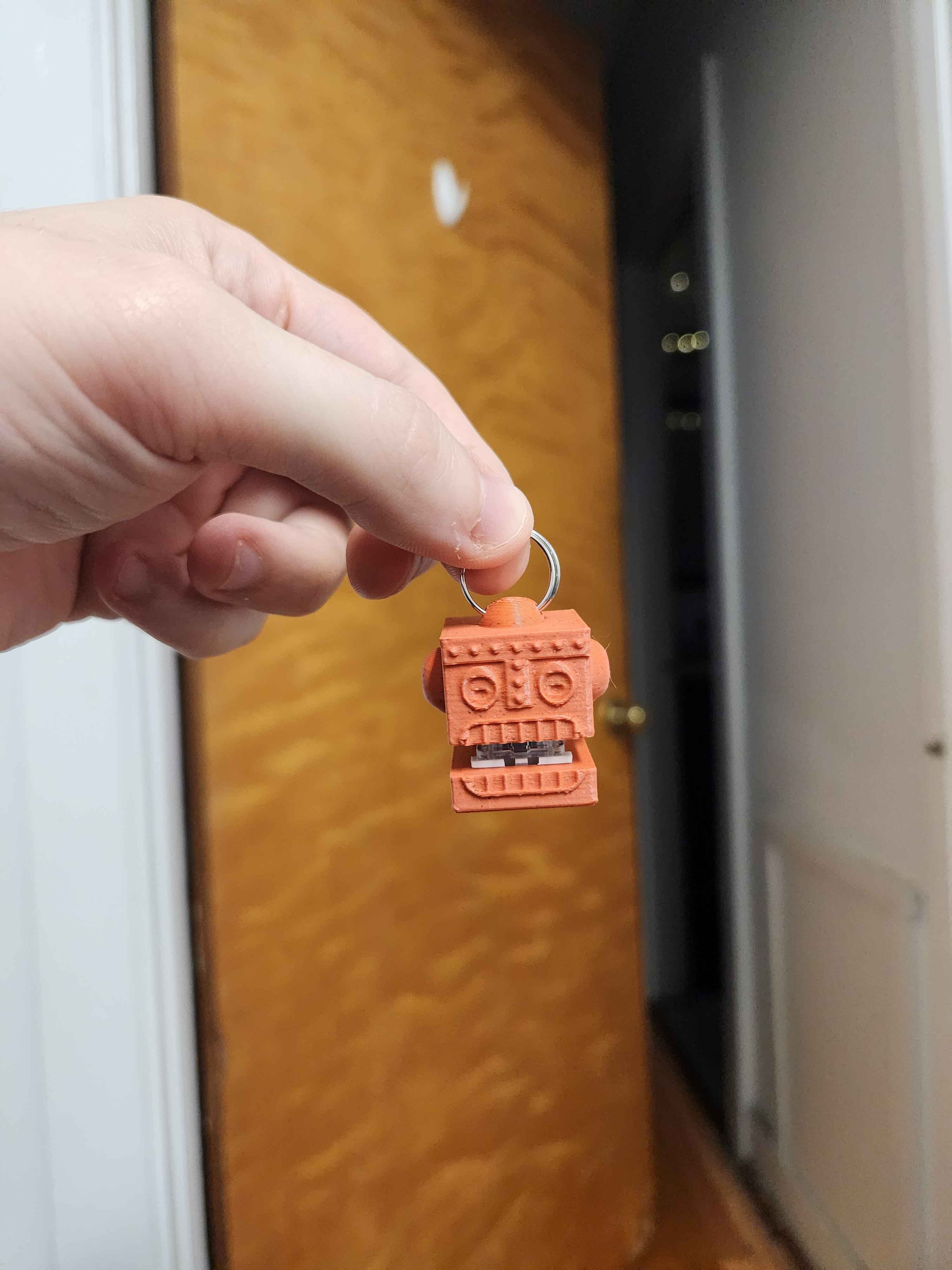
I feel like that would be a lovely thing to be able to bring around different places and just have something that can inspire and create. Having something that someone does is infinitely more useful to get them to wrap their head around something than just showing off an item. So even if it is jus having them assemble a key fidget, which we've done at a local Comic Con for the makerspace, just something that gets them hands-on with the different tools, gets ideas going, and reframing it from a thing that exists to a thing that could exist for them, and getting them into that mindset that they can do this - it's not just something other people do.
I love that. So, if people want to find out more about what you're working on and more about Hive76, where can they do that?
You can find me as Memento Mechanica on Instagram and a few other spots around the internet. That's where I tend to post some of hte projects I work on as well as different event work that I do. You can find Hive76 online at hive76.org as well as in northeast Philadelphia if you happen to be in the area. We do open houses every Sunday from 2 to 5. I'm also around at various maker events both for Hive76 and myself. If there's an event going on that has somethign cool to do with abrication and you see someone with a glowing, spinning denim jacket, there's a good chance that's me.
One last question for you. What do you wish I'd asked so you could answer it?
So, you did touch on this a bit, but I do love always asking how do you connect with your community? Not just how have you joined this community or what do you think of it, but how do you actually connect with them? And to answer it in my case, I'd say communication, trying to find points of interest where I can work with others and build projects and idea witht hem. But I do think the more fun part of that is asking that to others because there's a fun interaction that happens when you ask someone about how they connect with their community or asking someone what is something that they do that doesn't often come up. That leads to a little spark starting up int heir head where they start thinking about the communities that they're part of, the things they care about, and the people who they can connect with that may otherwise just go unconsidered due to it washing over in the day-to-day. So it's always one of my questions.
Everyone has something amazing and interesting about themselves. A lot of times it just doesn't come up in conversation, whether it just be circumstance or that no one's asked the right question that they feel comfortable to bring it out.